

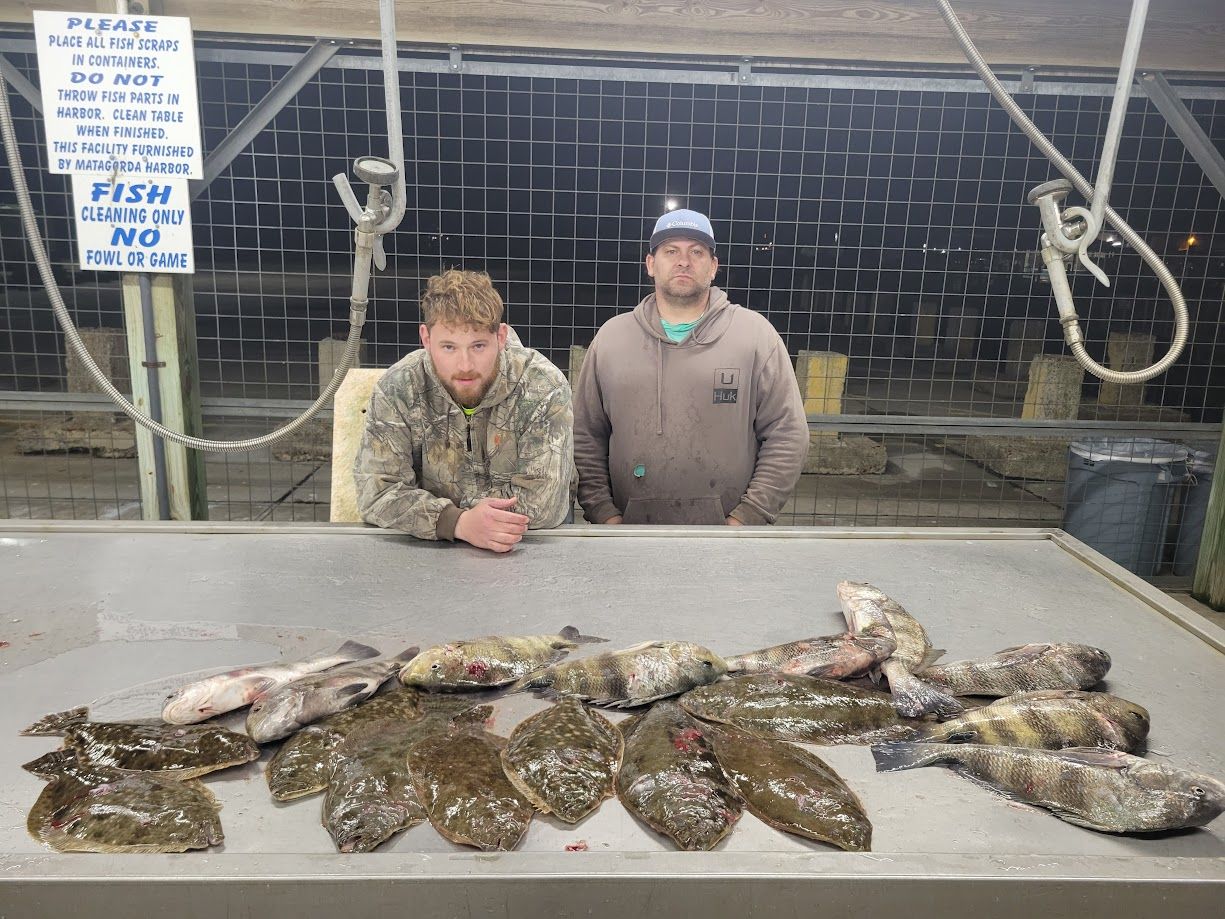


Night Gigging Matagorda's Back Lakes
 Matagorda
- Nighttime gigging across Matagorda's calm back lakes and shallow flats.
- Bright LED lights reveal Black Drum, Sheepshead, and Southern Flounder.
- Two-boat party accommodates groups of up to six guests.
Trip Pricing and Availabilities:
Night Gigging Matagorda's Back Lakes
If you've only ever fished Matagorda in the daylight, you're missing half the story. After the sun drops and the wind lays down, the back lakes and shallow flats turn into a whole different world, and the fish you chase with a rod all day suddenly show themselves right under the boat. This two-boat gigging party out of Bay Finatic Fishing and Night Gigging Guide Service is one of the most talked-about ways to spend an evening on the Texas coast, and it's a customer favorite for good reason. You're not waiting on a bite. You're hunting what you can see.
Trip Overview
Here's how the night works. We meet up around dusk, load into two boats, and push out into Matagorda's skinny back waters as the light fades. Once it's dark enough, the LED rigs fire up and the bottom lights up like a stage. Those high-intensity beams punch through the clear, shallow water and put everything on display: tailing drum, flounder tucked into the sand, sheepshead hanging around pilings and shell. With room for up to six guests, it's a perfect setup for a family outing, a buddy trip, or a small group celebrating something. Splitting into two boats keeps everybody close enough to share the excitement but gives each crew room to work the shoreline without crowding the next guy.
The boats move slow and quiet. We pole, drift, and creep along grass lines, drop-offs, and sandy pockets while one person scans the bottom and the gigger stands ready on the bow. Everybody rotates, so nobody gets stuck just watching. Between stalks you'll hear plenty of whispered "right there, right there" and the occasional laugh when somebody misses the shot of the night. That's part of the fun. Gigging looks easy until a flounder blends into the sand and a drum spooks sideways at the last second. It's hands-on, a little competitive, and a whole lot of action packed into a few hours on the water.
Nobody on the boat needs experience to enjoy it. If you can follow a light beam and stay steady on your feet, you're set. We walk newcomers through the basics before we ever leave the dock, and by the second or third fish most first-timers are calling shots like seasoned regulars. It's also a great alternative for anglers who want a break from the rod and reel, or for kids and teenagers who need a little more action than a bobber can provide.
One note worth knowing up front: no meals are included, so pack your own snacks and drinks. Bring something to sip on and something to munch between stalks. Nights on the bay can run long, and a cold drink goes a long way when the fish are cooperating and you don't want to head in.
Techniques or Terrain
Matagorda's back country is built for this kind of fishing. Think calm, protected lakes, shallow flats with sandy and grassy bottoms, and winding shorelines where the water rarely gets deeper than your knees. That shallow, clear water is the secret sauce. The fish move up to feed and rest after dark, and with the right lighting you can see them from several feet away. Water clarity matters a lot, so we pick our spots based on wind, tide, and recent weather. A light breeze and a clean tide, and the whole bay turns into a glass bottom boat.
The setup is simple but effective. Powerful LED lights mounted on the boat flood the water ahead of us, cutting the glare so we can look straight down at the bottom. A spotter calls out targets while the gigger stays in position on the bow, pole in hand, waiting for the right angle. The trick is patience and a smooth approach. Rush it and you'll bump the fish before you ever get in range. Slow down, keep the boat quiet, and let the fish stay comfortable. When the shot opens up, you've got to be quick and accurate, because even a relaxed flounder can bury itself or bolt in a split second.
Reading the terrain is half the battle. Flounder love edges, so we work along sandy drop-offs, shell patches, and the mouths of small drains where bait funnels through. Black drum often cruise the grass flats and muddy-bottomed